





5 Habits That Make Sinus Infections Worse in Glen Allen, VA
Battling common symptoms of a sinus infection, such as nasal congestion, sinus pressure, postnasal drip, and breathing difficulties, can be frustrating, especially if they start to affect daily productivity, sleep quality, and comfort.
If you’re noticing your sinus infection getting worse, rather than getting better, an ENT doctor in Glen Allen, VA, can help evaluate your symptoms and discuss potential factors that could be contributing to this pattern.
In this article, let’s explore five seemingly harmless everyday habits that may be contributing to worsening sinus infections.
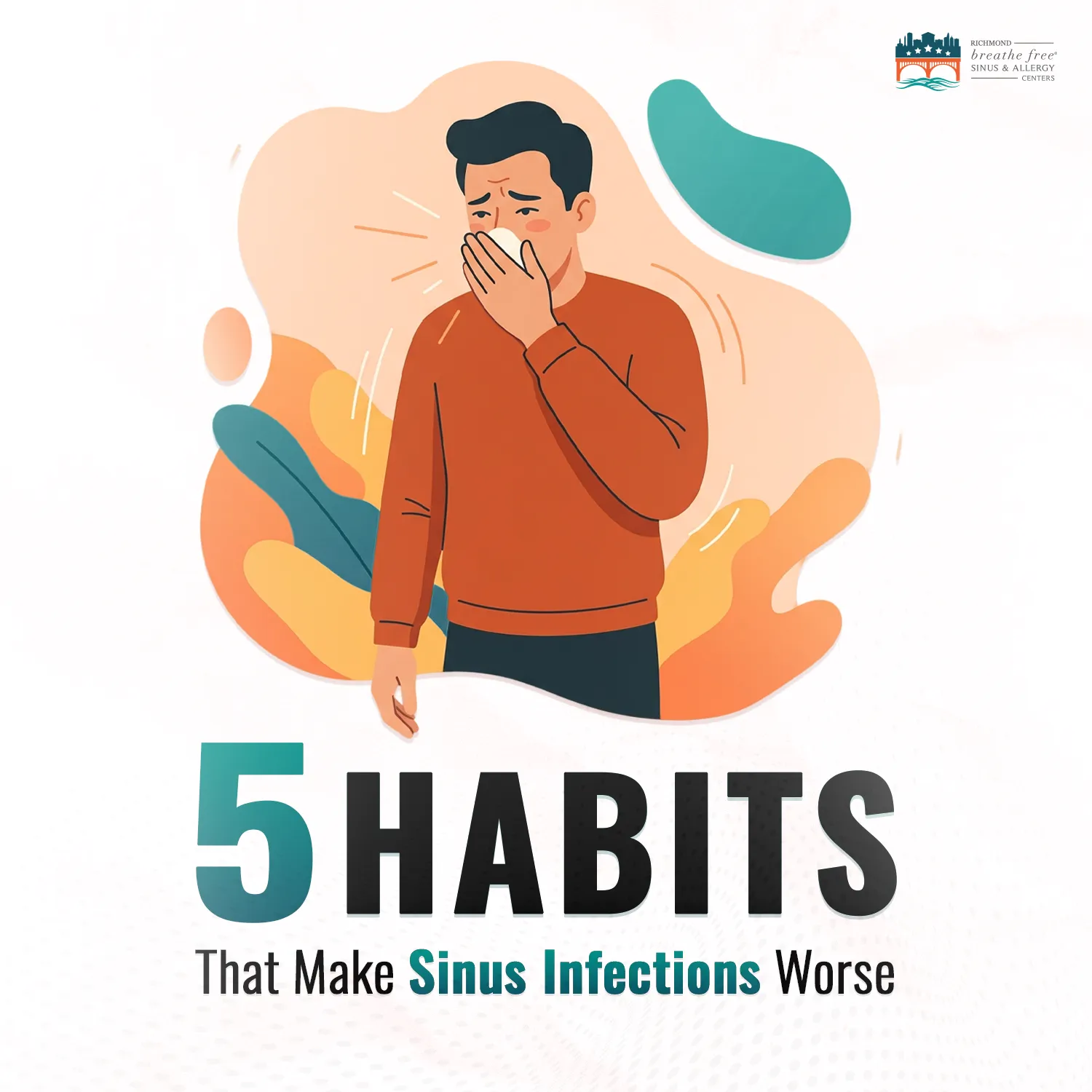
Five Habits That Are Making Your Sinus Problems in Glen Allen, VA, Worse–and What You Should Do About Them
#1: You’re not hydrating properly
During normal sinus function, the sinuses produce mucus, which humidifies the air we breathe and gets rid of potentially harmful particles we might have breathed in through the nose.
Dehydration may contribute to worsening sinus issues because when you’re dehydrated, the sinuses produce thick and sticky mucus, which is less efficient in trapping and eliminating irritants, aka one of its core functions.
Moreover, thicker and stickier mucus may cause fluid buildup, congestion, breathing difficulties, and sinus pressure.
What you should do: keep yourself well hydrated
Drink plenty of water to keep yourself well hydrated, especially if you’re already dealing with an ongoing sinus infection. Staying hydrated may support normal mucus consistency and overall comfort.
#2: Your air is too dry
Dry air can potentially dry the mucus membranes, causing even more irritation in the nasal and sinus passages. Sometimes, this can lead to thick mucus production, which can cause fluid buildup, congestion, and breathing difficulties in some individuals
What you should do: monitor and adjust indoor moisture levels
If your indoor air feels dry, run an indoor humidifier, especially in your bedroom during sleep. This may bring moisture back to the air and help soothe irritated sinuses.
#3: You’re not paying attention to your allergens and triggers
Unmanaged allergies and ignoring potential triggers may be one of many contributing factors for persistent or worsening sinus infection symptoms.
If you have a habit of ignoring common allergens and triggers such as pollen, mold, dust mites, pet dander, smoke, perfume, cologne, and other irritants, then you might be risking even more irritation and inflammation in your sinuses.
What you should do: stay on top of potential irritants
While you can’t completely avoid allergens and irritants, there are ways you can manage your exposure to them, such as:
- Monitoring daily pollen and allergen counts
- Wearing a protective face mask when heading out, especially if allergen counts are high
- Keeping your home and workspace clean and free from allergens and irritants
- Practicing frequent hand washing habits
- Avoiding smoking, especially if you have a sinus infection
- Avoiding wearing colognes and perfumes in the meantime, if you have a sinus infection
#4: You’re overusing nasal decongestant sprays
Nasal decongestant sprays are a common medication for sinus infections. What they do is narrow the blood vessels lining the nasal and sinus passages, which may reduce swelling and, in appropriate cases, offer temporary relief from nasal congestion and breathing difficulties.
While a sought-after medication, problems arise when there is overuse. Overusing nasal decongestant sprays may lead to further sinus irritation and worsen ongoing symptoms. This is what is known as rebound congestion. It could also create a cycle of increased congestion and dependency on the medication.
What you should do: use nasal decongestant sprays accordingly
You don’t have to completely stop the use of nasal decongestant sprays. After all, they may provide some benefits. However, it’s important to use them as directed, which is usually for no more than three days.
Additionally, practice proper nasal hygiene. Nasal irrigation with a neti pot may help reduce mucus buildup. Of course, follow device instructions carefully on proper use. Use only sterile, distilled, or previously boiled water to reduce risks of infection due to improper use.
#5: You’re not sleeping right
Adequate sleep and rest can help support overall health and immune system function, which is especially important if you have an ongoing infection.
Getting enough sleep supports overall health and immune function, which may be helpful if you’re feeling unwell.
Additionally, if you’re not sleeping in the right position, you are risking mucus pooling in the sinuses, which worsens nasal congestion and discomfort during sleep.
What you should do: get adequate sleep every night
Get enough sleep and rest every night. How many hours of sleep you should get varies by person and age. But most people need about seven to nine hours of sleep every night.
Moreover, sleep with your head slightly elevated, which may help with proper mucus flow and drainage. This can increase comfort and help you sleep better at night.
Frequently Asked Questions About Sinus Infections in Glen Allen, VA
What is a sinus infection?
A sinus infection, also referred to as sinusitis, is characterized by the irritation, swelling, and inflammation of the sinus tissues, which can cause mucus buildup, nasal congestion, and sinus pressure.
The sinuses are hollow, air-filled spaces behind the nose, cheeks, and forehead. They naturally produce mucus that traps and removes irritants. However, sometimes, they can become irritated and swollen.
What does an ENT in Glen Allen, VA, do?
An ENT, also known as an otolaryngologist, diagnoses and treats conditions of the ears, nose, throat, neck, and related facial structures. Some common conditions that they may address include sinus infections, allergies, ear infections, hearing disorders, throat concerns, balance issues (such as dizziness and vertigo), and sleep-related breathing disorders (such as severe snoring and sleep apnea).
When should I see an ENT for a sinus infection?
Some sinus issues may improve on their own, with proper rest, home remedies, and standard medication. However, if your symptoms become severe, persistent, or recurring, you may benefit from seeing an otolaryngologist in Glen Allen, VA, according to your individual needs and concerns.
Conclusion: Looking for Ear, Nose, and Throat Care in Glen Allen, VA
This educational content is provided by Richmond Breathe Free for general informational purposes only. Consult with a professional healthcare provider for diagnosis and treatment.
Richmond Breathe Free provides ear, nose, and throat care services in Glen Allen and the nearby Virginia communities. Visit and explore our website to learn more about our clinic and services.