




Can a Deviated Septum Cause Different Symptoms on Each Side of the Nose?
It can be surprisingly common to feel like one side of your nose works better than the other. You may breathe freely through your right nostril in the morning but feel blocked on the left later in the day. Sometimes one side feels consistently more congested, while the other seems relatively clear.
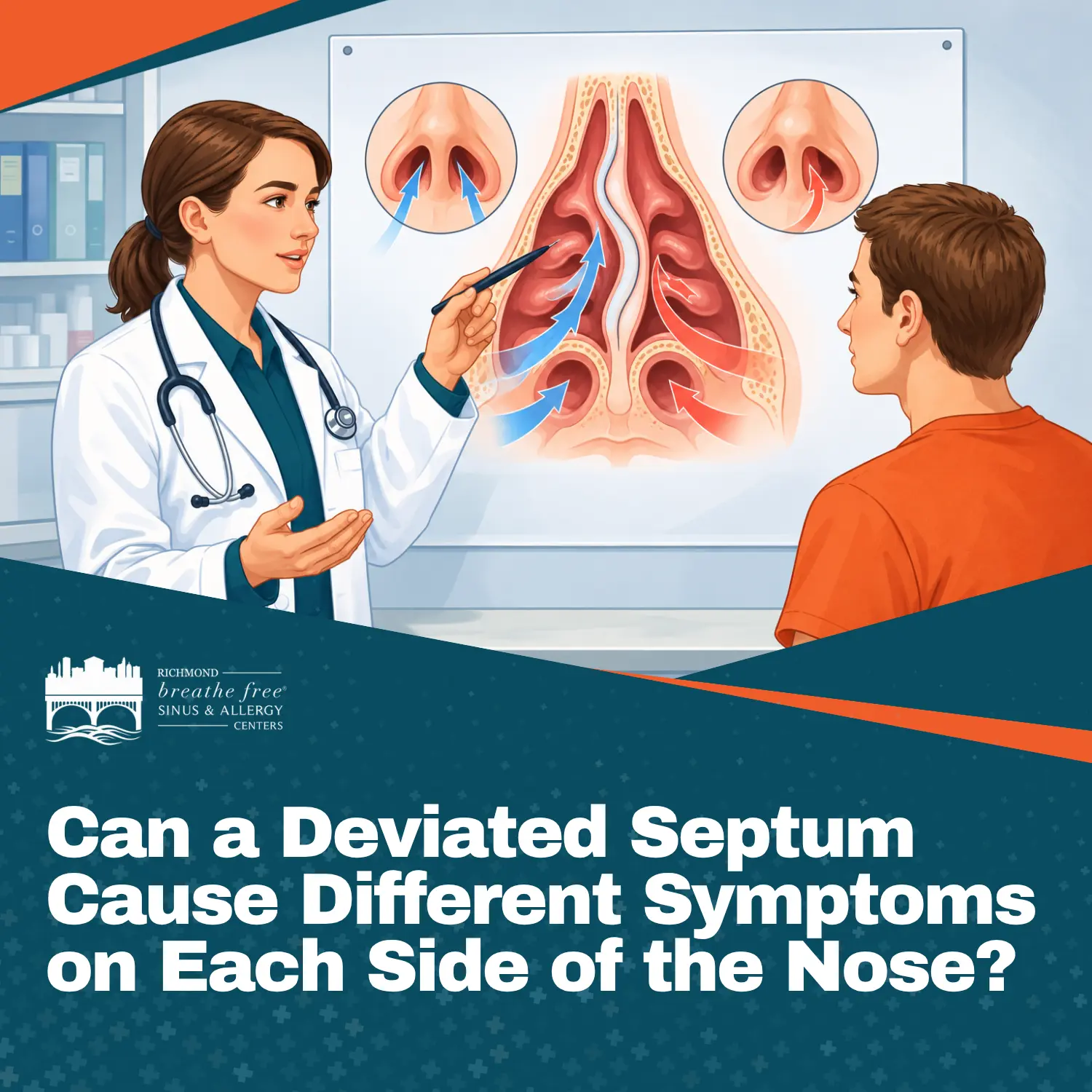
A deviated septum can contribute to this uneven feeling. The septum is the structure that separates the two sides of the nose. When it bends or shifts away from the center, it can leave less room for airflow on one side than the other.
At Richmond Breathe Free Sinus & Allergy Centers, an ENT evaluation can help determine whether a deviated septum is behind uneven nasal breathing or whether congestion, allergies, or another nasal condition is also contributing to your symptoms.
Why Can One Side Feel More Blocked Than the Other?
The nasal septum does not always sit perfectly straight. A deviation can narrow one nasal passage, making it more difficult for air to move through that side.
The degree of obstruction depends on the shape and location of the deviation. Some people have a mild bend that causes few symptoms, while others have a more significant narrowing that makes one side noticeably harder to breathe through.
Swelling inside the nose can make the difference even more noticeable. If the tissue lining an already narrow nasal passage becomes inflamed, there may be even less room for air to pass.
This is one reason nasal symptoms can feel uneven rather than affecting both nostrils in exactly the same way.
What Is the Nasal Cycle?
Your nose naturally changes which side carries more airflow throughout the day. This is known as the nasal cycle.
During the nasal cycle, blood flow to the tissues inside each nasal passage changes. One side may become slightly more congested while the other opens up, and the pattern eventually reverses.
Most people do not notice this process because the changes are subtle. A deviated septum can make the difference much more noticeable because one side may already have less available space.
For someone with a significant deviation, the side that becomes more congested during part of the nasal cycle may feel almost completely blocked.
What Symptoms Can Affect One Side More Than the Other?
A deviated septum can produce symptoms that are more noticeable on one side, although the exact pattern varies.
You may experience:
- Difficulty breathing through one nostril
- A persistent feeling of nasal blockage
- Alternating congestion that changes throughout the day
- Greater dryness or irritation on one side
- Recurrent nosebleeds from one nostril
- More noticeable snoring when nasal breathing is restricted
- A sensation that one side of the nose is narrower than the other
Not everyone with a deviated septum develops symptoms. Some people have a septal deviation that is discovered during an examination for an unrelated concern.
The presence of symptoms, rather than the appearance of the septum alone, helps determine whether the deviation may be affecting your breathing.
Can Allergies Make the Difference Between the Two Sides Worse?
Yes. A deviated septum and nasal inflammation can occur at the same time.
Allergies can cause the tissues inside the nose to swell, reducing the available space for airflow. If one nasal passage is already narrower because of a septal deviation, additional swelling may make that side feel significantly more blocked.
This can make it difficult to tell whether the problem is structural, inflammatory, or both.
Treating allergies may reduce swelling, but it will not straighten a deviated septum. Likewise, addressing the septal deviation may not eliminate symptoms caused by ongoing nasal inflammation. An evaluation by a specialist from a modern ENT clinic can help determine how these factors may be interacting.
Can a Deviated Septum Cause Sinus Problems?
It can contribute to sinus symptoms in some people.
The nasal passages help move air and mucus through the nose and sinus openings. A deviated septum primarily affects airflow through the nasal passages. In some cases, a significant deviation may also contribute to narrowing near sinus drainage pathways, although this does not necessarily cause sinusitis. An ENT evaluation can help determine whether the deviation is relevant to a patient's sinus symptoms.
However, a deviated septum does not automatically mean that you will develop chronic sinusitis. Sinus problems have multiple possible causes, including inflammation, allergies, infections, and other anatomical factors.
That distinction matters when deciding what treatment may actually help.
How Does an ENT Determine Whether the Septum Is Causing Your Symptoms?
An ENT will typically begin by asking about your symptoms, including whether the blockage is constant, changes from side to side, or becomes worse at certain times.
The inside of the nose can then be examined for a deviated septum, swelling, enlarged nasal tissue, polyps, or other sources of obstruction. In some cases, additional testing or imaging may be recommended to get a better view of the nasal and sinus anatomy.
The goal is to identify what is actually limiting airflow rather than assuming that a visible septal deviation is responsible for every nasal symptom.
What Can Be Done About a Symptomatic Deviated Septum?
Treatment depends on what is causing the symptoms and how much they interfere with your daily life.
If inflammation is contributing to congestion, medications may help reduce swelling and improve airflow. These treatments can address the inflammatory component but cannot physically straighten a deviated septum.
When the septum itself is significantly obstructing airflow and symptoms remain bothersome, an ENT may discuss septoplasty, a surgical procedure used to straighten the nasal septum and improve the space available for breathing.
Not every deviated septum requires surgery. The decision depends on your symptoms, examination findings, and response to other treatments.
When Should You Have Uneven Nasal Breathing Checked?
Occasionally having one nostril feel more open than the other is not necessarily a sign of a problem. The nasal cycle can cause normal changes in airflow throughout the day.
Persistent or bothersome one-sided obstruction is different. An evaluation may be appropriate if you regularly have difficulty breathing through one nostril, experience recurring nosebleeds, snore because of nasal blockage, or have congestion that does not improve with typical treatments.
An ENT can determine whether a deviated septum is contributing to the problem and whether another condition is making the symptoms worse.
Tired of Feeling Like One Side of Your Nose Never Works?
Breathing through your nose should not feel like a constant struggle between one nostril and the other. If one side repeatedly feels blocked, there may be a structural reason for it, but swelling from allergies or other nasal conditions can also play a role.
Call Richmond Breathe Free Sinus & Allergy Centers and schedule an appointment to find out what may be affecting your nasal airflow and discuss treatment options that fit your symptoms.